Bagru, Rajasthan · since 1974
Three generationsof the same table
Rupali Printers is not a brand that commissions block printing. We are the shed where the printing happens — the blocks, the vats, the drying roof and the forty-one families who work them.
52
years of continuous printing, without a single season off since 2017.
It began as a debt
In 1974 my father borrowed ₹800 against a gold bangle to buy his first four blocks. The bangle was my mother's. She has never once let him forget it.
He printed alone for the first two seasons, walking the finished lengths to the Sanganer road to sell them at whatever the traders offered. The margin was humiliating and the work was beautiful, which is a combination the Indian craft sector has lived with for a very long time.
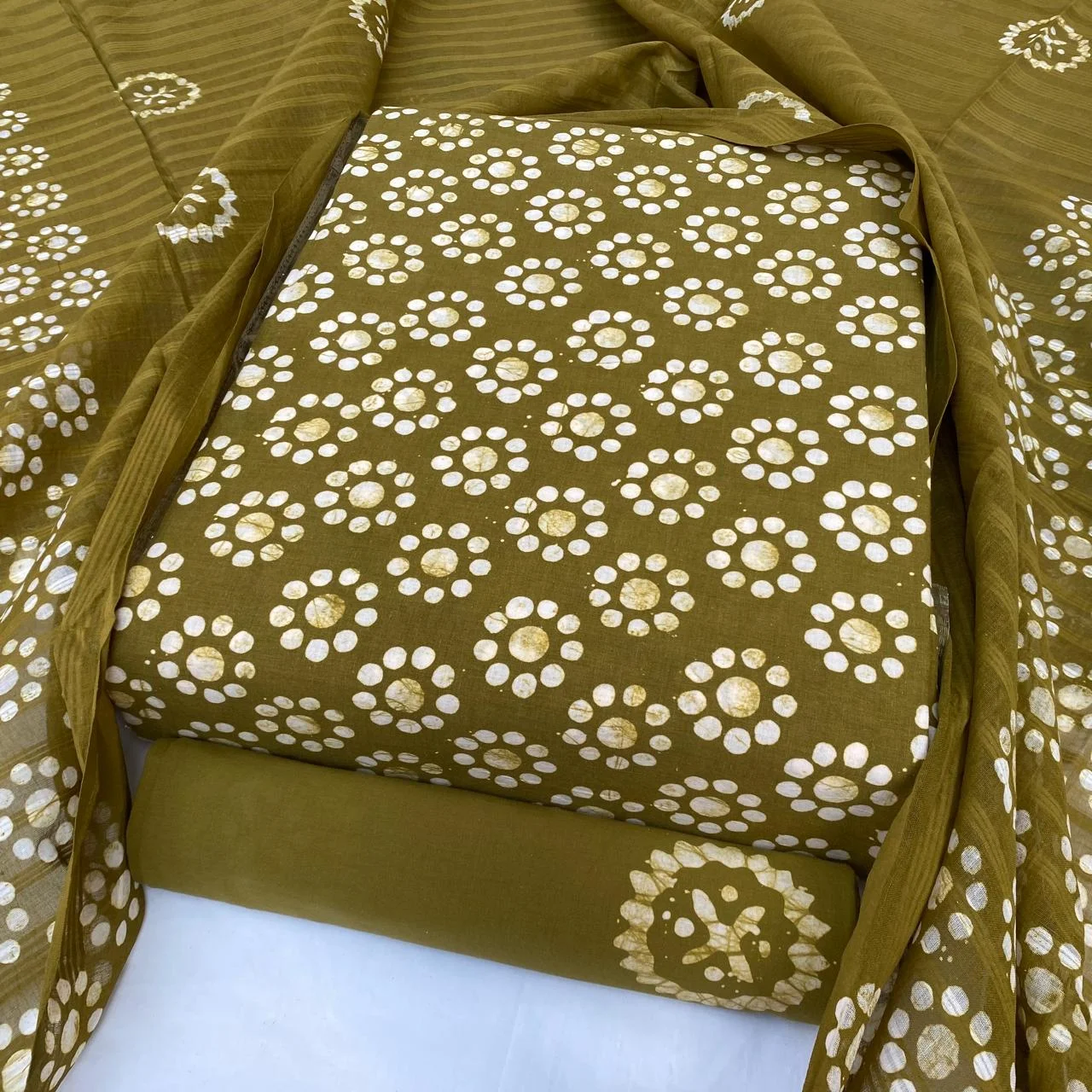
What changed was not the printing. The printing is almost identical to what he did fifty years ago — same wax, same vats, several of the same blocks. What changed is that we now sell directly, so the money that used to sit with four intermediaries sits with the people holding the blocks.
That is the entire business model. Everything else is craft.
Rupali Sharma · Founder
How it is made
Four hands, four days,
one length of cloth
The block is cut
A single motif is carved into seasoned sheesham wood, in reverse, by hand. A complex jaal can take a carver eleven days. We still print from blocks cut in 1998 — they wear softer with age, and the print gets warmer for it.
Molten wax is laid
Beeswax and paraffin are held at exactly 62°C. Too cool and the wax sits on the surface; too hot and it bleeds past the motif. The printer registers each stamp by eye against the last — three metres, several hundred impressions, no guides.
Into the dye vat
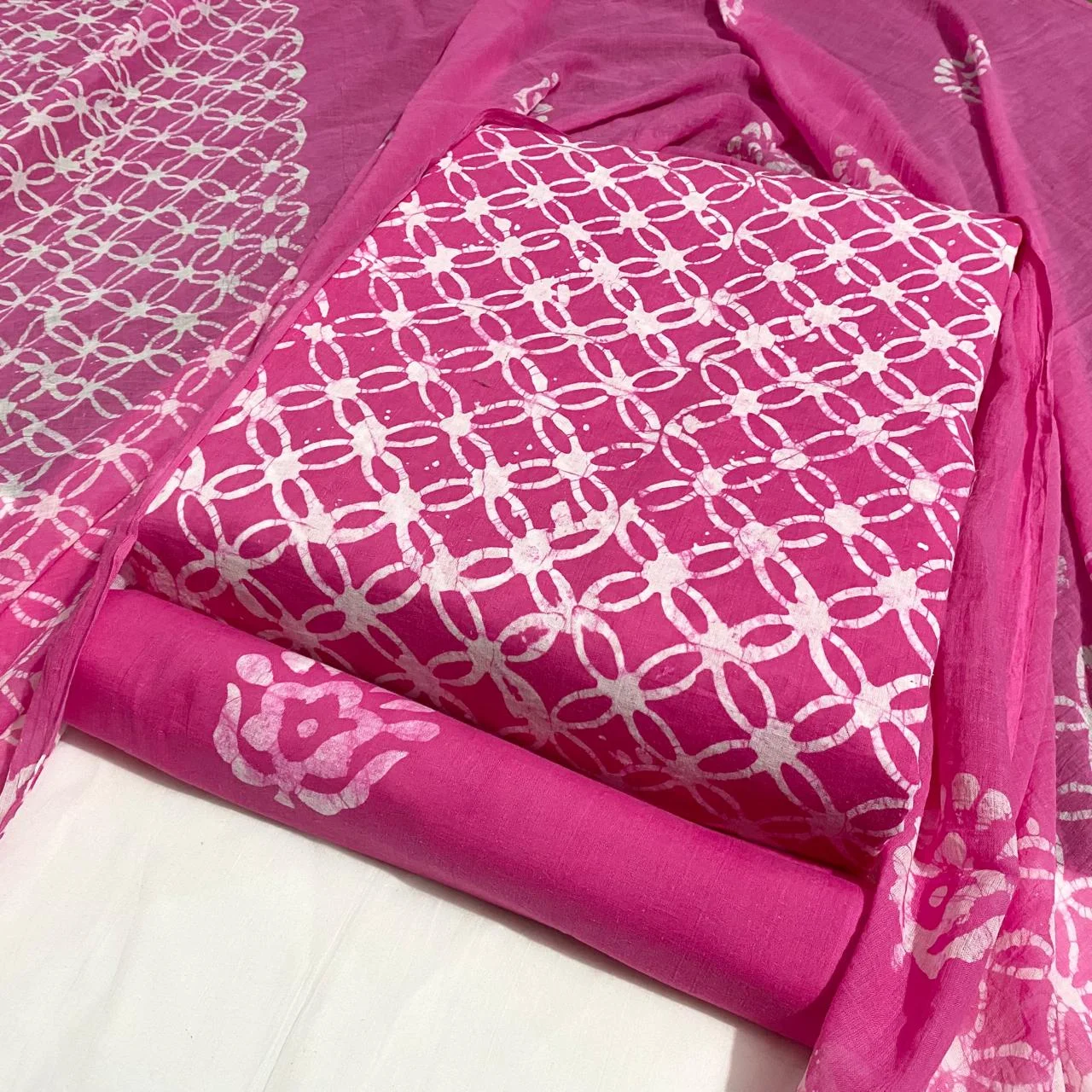
The waxed length goes into a cold natural bath — indigo, madder, pomegranate rind, turmeric. Wax repels the dye and holds the motif white. Deeper shades are simply more dips: our indigo goes in twice, sometimes three times.
Cracked, boiled, dried
The dried wax is crushed so dye seeps into the fractures — that fine veining is the signature of true batik. Then boiling water lifts the wax away, the cloth is river-rinsed and sun-dried on the roof. Nothing about this can be hurried.
Our mission
Keep wax-resist printing economically viable
Batik survives only if printing pays better than leaving for the city. Everything we do — the pricing, the year-round schedule, the direct sales — exists to make the craft worth staying in.
Our vision
A Bagru length in every Indian wardrobe
Not as a souvenir or a special occasion piece, but as the shirt you reach for on a Tuesday. Handmade should be ordinary again.
The shed, in order
Six moments that changed how the work is done.
1974
Four cousins, one table
Kishan Lal Sharma sets up a single printing table behind the family house in Bagru. Four cousins print, one bicycle delivers.
1986
The first indigo vat
A natural indigo vat is built in the courtyard. It has been fed and kept alive, without interruption, ever since.
1998
The ambi block
Our master printer carves the paisley block still used for the Neelkanth range. Twenty-eight years and thousands of lengths later, it prints softer than ever.
2009
Rupali takes the shed
The founder's daughter takes over, moves the unit to azo-free dyes entirely, and puts wastewater settling tanks in before it is a legal requirement.
2017
Year-round work
Monsoon lay-offs end. The unit begins printing into inventory through the wet months so that forty-one families earn twelve months a year.
2026
Direct to your door
The shed sells directly for the first time. No distributor margin, no middleman — the price you see is the shed price.
Four checks before it is yours
Roughly one length in eleven never makes it to the site. That is the cost of hand work, and we absorb it rather than pass it on.
- 01
Greige inspection
Every bolt is checked for weave faults before a drop of wax touches it. Roughly 6% is rejected at this stage.
- 02
Dye lot sampling
A test strip from each vat is washed four times and compared against the master card before the lot is committed.
- 03
Length audit
Each finished piece is measured, held against the light for pinholes, and matched to its dupatta.
- 04
Final fold
Passed lengths are folded into cotton with a card naming the printer. Failed lengths never reach the site.
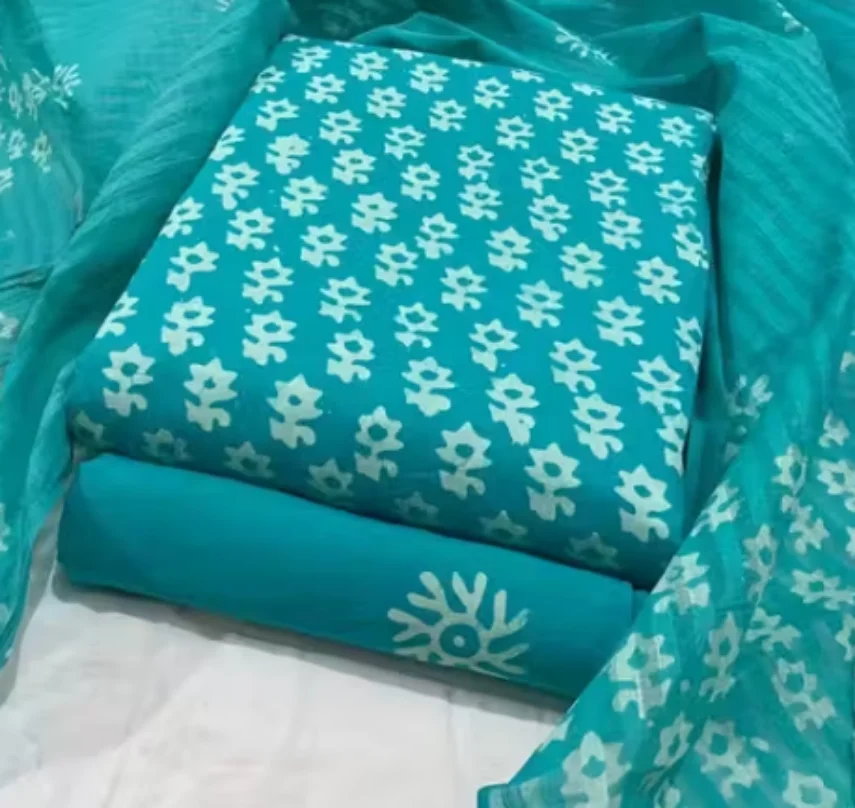
Every parcel carries the initials of the printer who stamped it.
Come and see the shed. We mean that literally.
Visitors are welcome any working morning. Watch a length being waxed, put your hand in the indigo vat, and leave with dye under your fingernails.