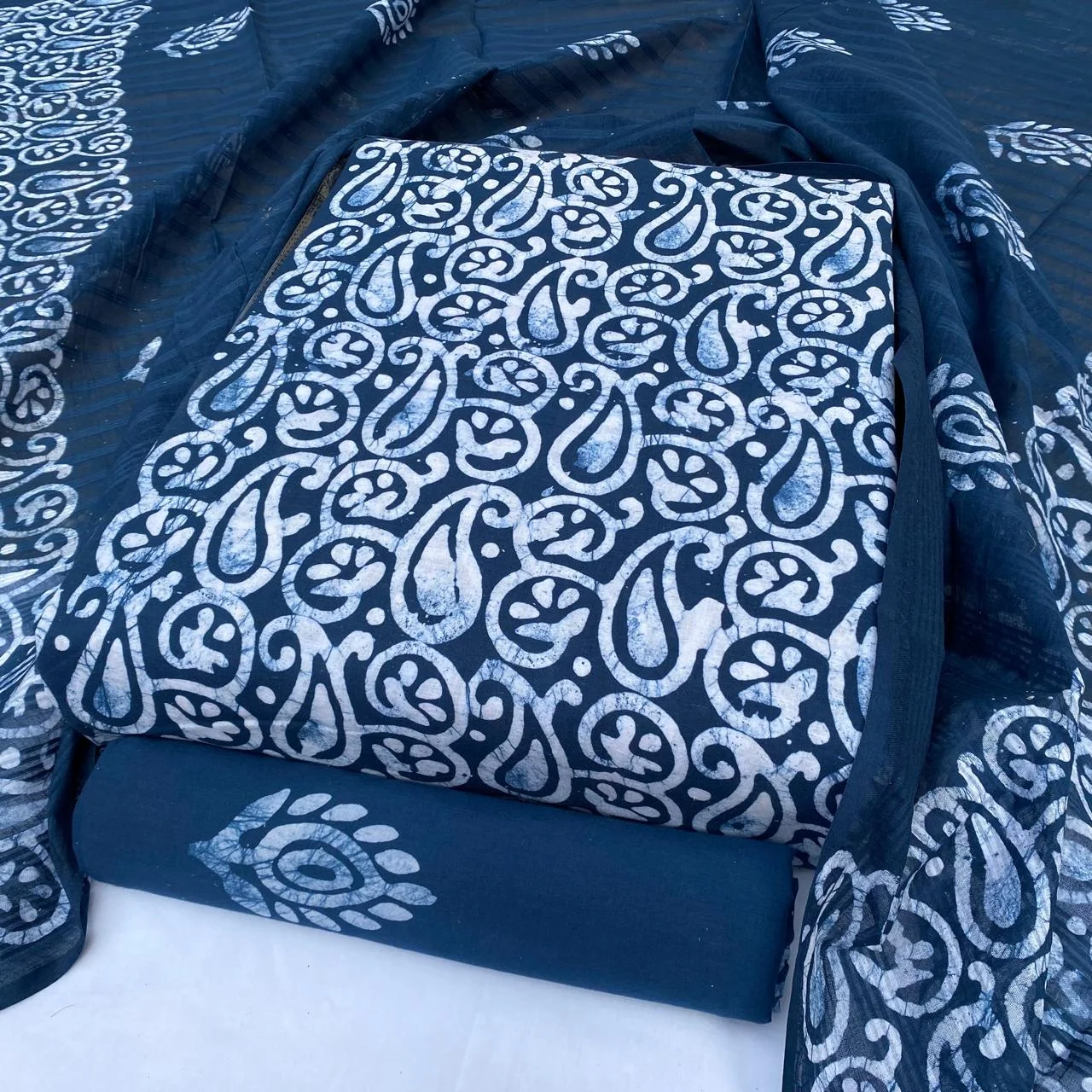
When my father started in 1974 there were four printers, all of them cousins. Today forty-one families print for us, and roughly half of them are the children or grandchildren of those four.
We pay by the piece, which is standard in Bagru and widely abused. Our version has two rules attached: the rate is set above the district average and reviewed every April, and there is no seasonal lay-off.
Why year-round matters more than the rate
Block printing is seasonal by nature. Monsoon makes drying slow, and most units simply stop. Families that depend on the work borrow through those months and spend the next season repaying.
We hold stock through the monsoon instead — printing into inventory rather than into orders. It costs us working capital and it is the single most useful thing we do.
A good rate for four months is worse than a fair rate for twelve.
2 comments
- KM
Kavita Menon
3 days agoI checked my dupatta against a window after reading this and the veining is completely irregular — such a relief. Thank you for explaining it so clearly.
- AP
Arjun Patel
1 week agoWould love a follow-up on how the wax is recovered after the boil-off. Is any of it reused?
RSRupali Sharma
Rupali Printers6 days agoRoughly 60% is skimmed off the boiling water and reused. The rest goes into the fabric permanently or is lost to the drain trap — we're working on that number.