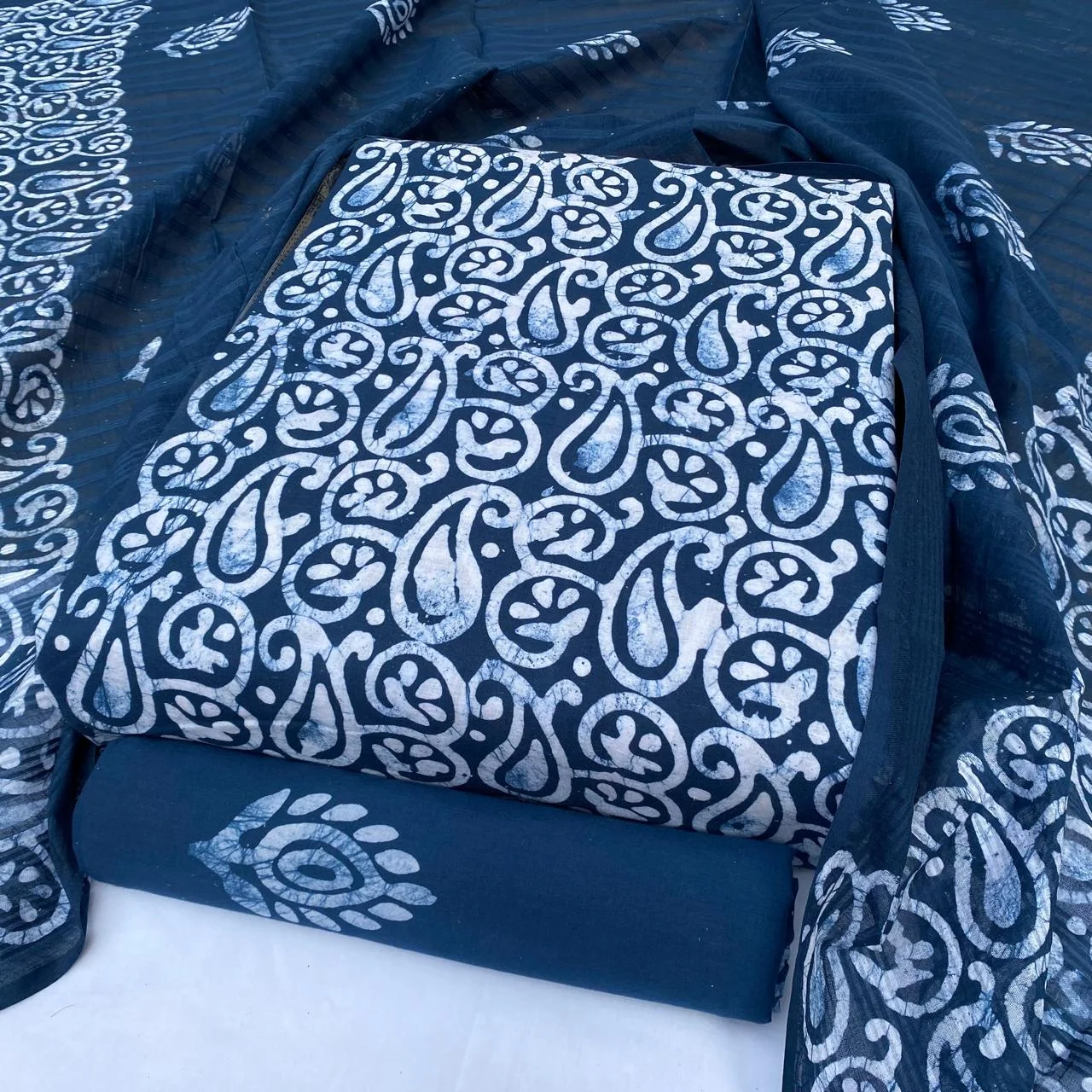
A natural indigo vat is not a bucket of blue liquid. Left alone it is a murky yellow-green, and it only turns blue when the cloth comes out and meets the air.
Keeping one alive is closer to keeping a sourdough starter than mixing paint. It is fed jaggery and lime, kept warm, and stirred at the same hours each day. A neglected vat sulks for a week.
Why we dip twice
Depth in indigo does not come from a stronger solution — it comes from repetition. Each dip lays a thin film of pigment; each airing oxidises it and fixes it.
Our Neelkanth lengths go in twice, occasionally three times when the vat is behaving. Between dips the cloth hangs for four hours, which is why a single length can occupy three days of the calendar.
One dip gives you a pleasant mid-blue. Two gives you something that reads black until sunlight hits it.
2 comments
- KM
Kavita Menon
3 days agoI checked my dupatta against a window after reading this and the veining is completely irregular — such a relief. Thank you for explaining it so clearly.
- AP
Arjun Patel
1 week agoWould love a follow-up on how the wax is recovered after the boil-off. Is any of it reused?
RSRupali Sharma
Rupali Printers6 days agoRoughly 60% is skimmed off the boiling water and reused. The rest goes into the fabric permanently or is lost to the drain trap — we're working on that number.