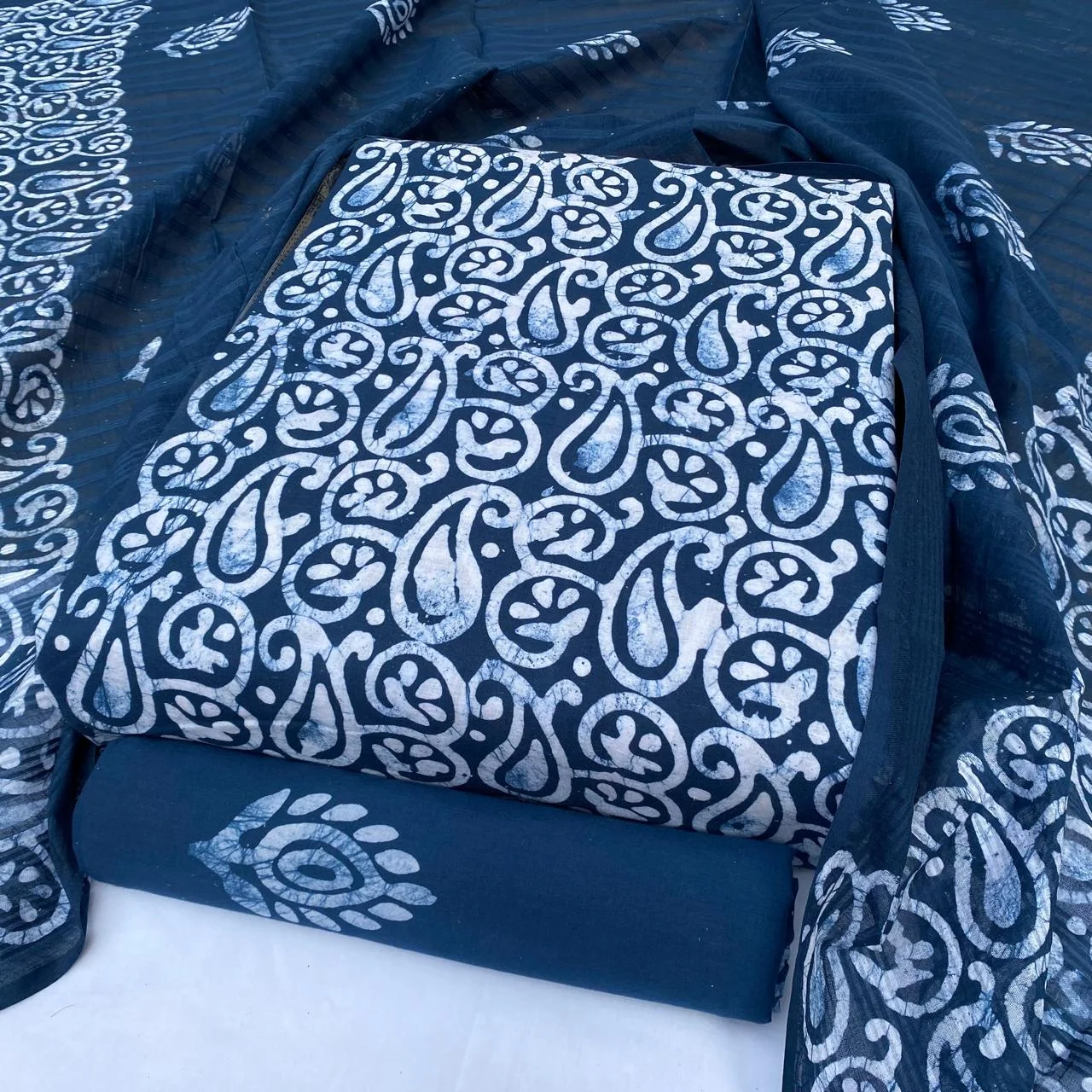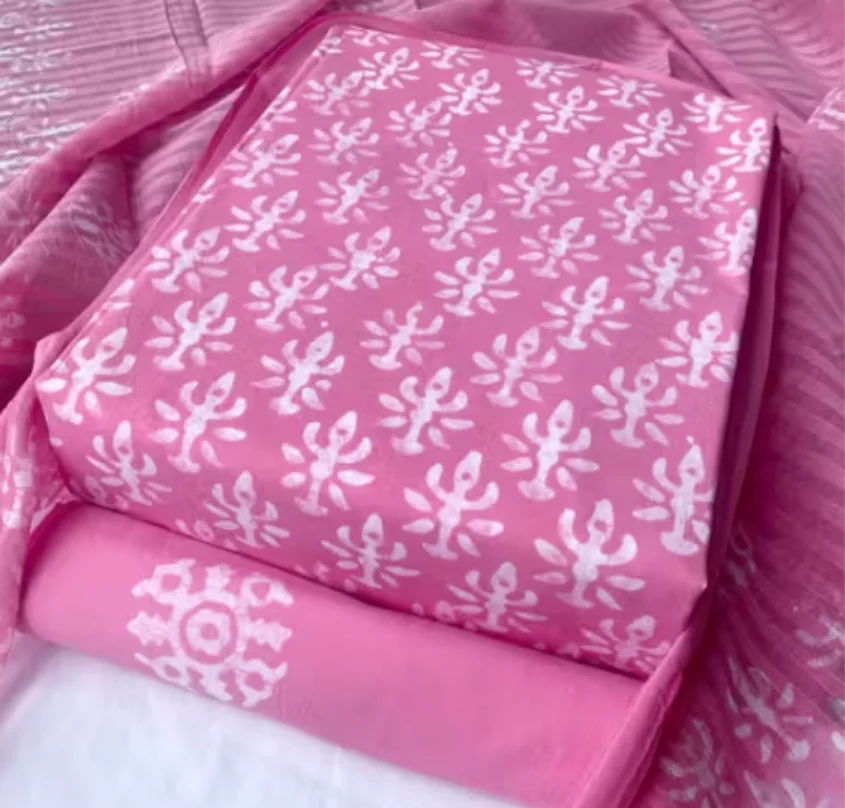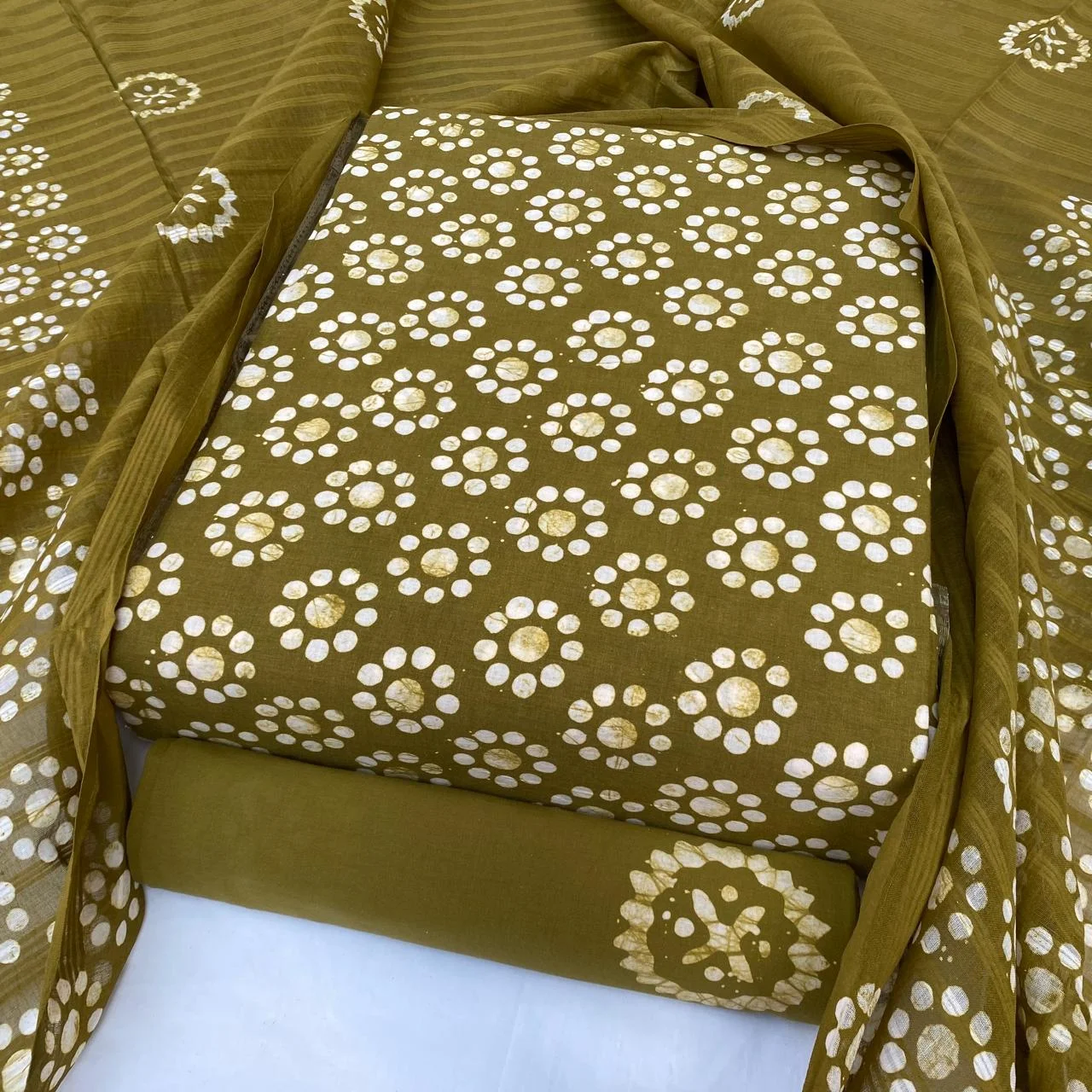
A block is a negative. Carvers work in reverse, and the depth of the cut decides how crisply the wax sits.
Shallow cuts clog quickly and print mushy. Deep cuts hold wax but leave a heavy deposit that cracks too coarsely. The right depth is roughly four millimetres, and it is judged entirely by hand.
Age improves them
New sheesham is hard and prints sharply, almost mechanically. After a few hundred lengths the surface softens and the edges round very slightly.
That is when a block starts producing the warm, slightly irregular impression people associate with hand printing. Our oldest working block was cut in 1998 and it is the one we reach for first.
2 comments
- KM
Kavita Menon
3 days agoI checked my dupatta against a window after reading this and the veining is completely irregular — such a relief. Thank you for explaining it so clearly.
- AP
Arjun Patel
1 week agoWould love a follow-up on how the wax is recovered after the boil-off. Is any of it reused?
RSRupali Sharma
Rupali Printers6 days agoRoughly 60% is skimmed off the boiling water and reused. The rest goes into the fabric permanently or is lost to the drain trap — we're working on that number.